There are no spoilers in this piece, so don’t worry if you haven’t reached this part of the series yet.
“I also have a crusader’s heart in one of my walls.”
The house shook a little for a moment, and then Dola continued, “Ah yes, there it is. It is currently at the end of the hallway near the horrid pink bathroom.”
Spilling the Tea in Gretna Green. Kindle page 16, 2 %.
Paperback page 16.
You can visit the Spilling the Tea in Gretna Green page by clicking here.
The Crusader’s Heart
Today we’re talking about that crusader’s heart, which is a tiny and frankly irrelevant part of the House Party in Gretna Green novella, but it is perhaps one of the top ten things that generate email from readers.
It usually goes something like … “Tell me that’s not really a thing, is it? I know Brits are weird, but seriously!?”
Yep, we’re weird and yes, it’s really a thing.
Actually, most of the truly bizarre things in the books are based on some truth. The stone from Hadrian’s Wall, for example, really was, as Dola told Niki, stolen wantonly for local building projects, houses, churches and abbeys.
Probably NOT in the case of the church we’re talking about today (which was built later) but it does have its own crusader’s heart. As do many other churches, monasteries and buildings in the UK.


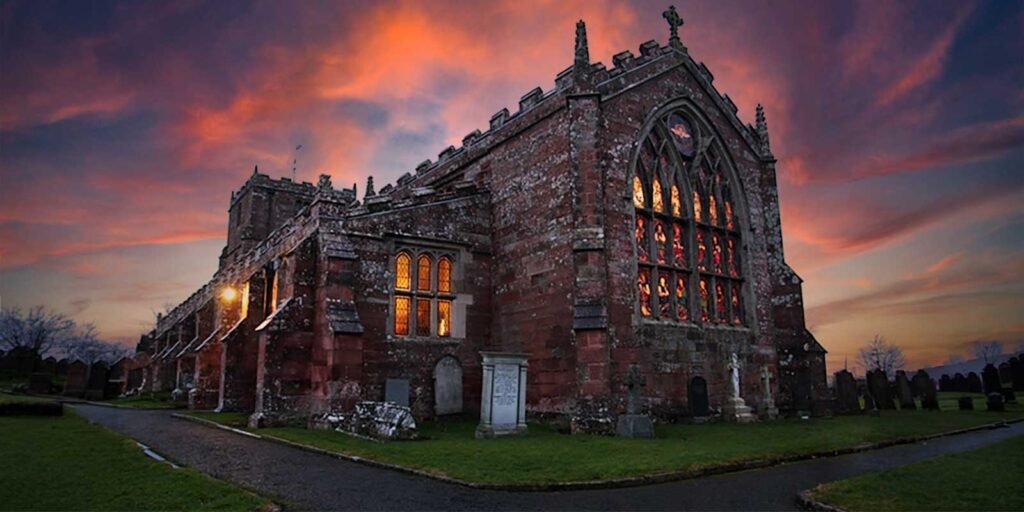
Photo Credit: The images above are of St Michael’s & All Angels Church, Longtown, England.
Quite a lot of churches and priories in the UK have crusaders’ hearts in their walls. This one is only a few miles from me.
Wiki page is here.
The ground around here was disputed so aggressively and for so long it became known as the Debatable Lands.
Those of you who love strange research might find this page intriguing. Everything from the history, the politics, the heart and even coins from Jesus’s lifetime.
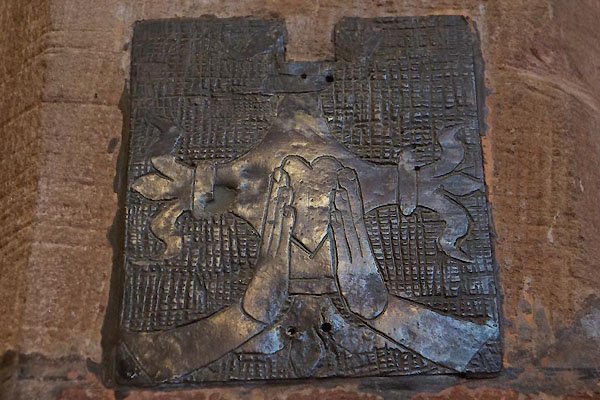
A brass plaque marks the heart’s location in the beautiful little church.
The Debatable Lands
St Michael & All Angels Church at Arthuret (the featured image at the top of the page) is in Longtown, Cumbria, England today—but it sits on one of the most famously “blurred” stretches of the Scottish Borders.
The ground around here was disputed for so long it became known as the Debatable Lands.
Or to the Scots, the “Threpe” which just means ‘something we can argue about.’ 😀
In the medieval period, the wider Carlisle/Cumberland region changed hands frequently, as Mabon ap Modron often mentions in the Midlife Recorder series.
There were periods when it was held by the Scottish crown, before being firmly gathered briefly back under English authority. As mentioned in the Treaty of York in 1237. (Wiki page)
But even in the late Middle Ages, the Border stayed turbulent for centuries, and in 1552 the Debatable Lands were formally divided between England and Scotland, marked by the Scots’ Dike (Wikipedia)—still close by today.
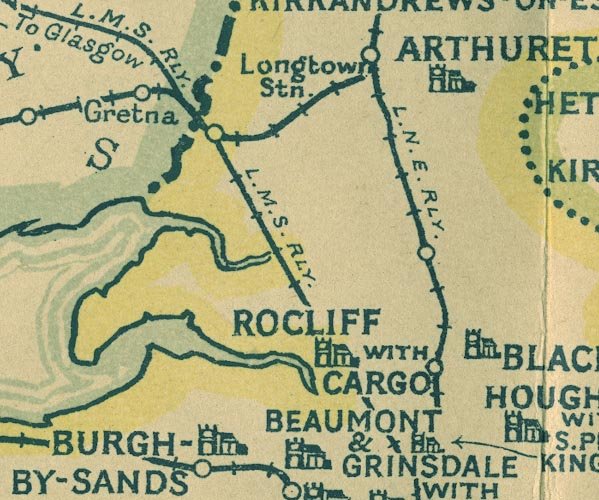
Map from 1918, showing St Michael’s & All Angels Church, Arthuret. It’s just under 4 miles from Gretna Green.
The Debatable Lands led to the Reivers …
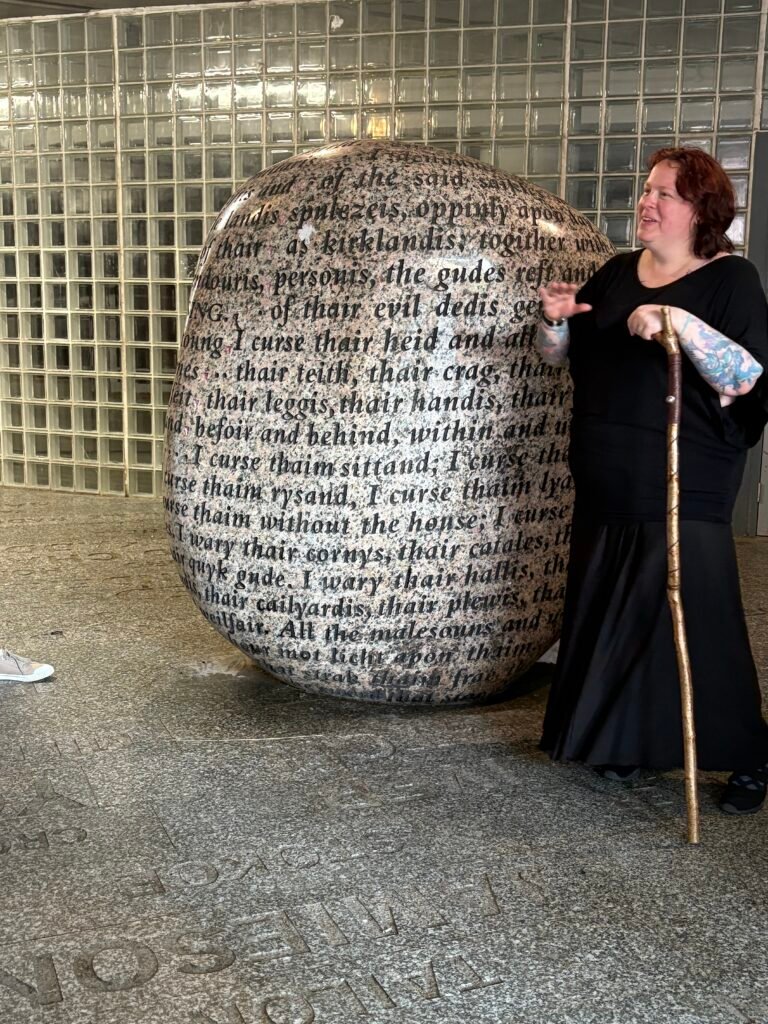
The Border Reivers, are also mentioned in the books several times by, you guessed it, didn’t you—Mabon? They caused so much trouble the Archbishop of Glasgow stepped in to curse them. Which led, just twenty-five years ago, to a stone to commemorate that turbulent time in the Borders’ history.
And when I say “Stone” it’s one Mabon would be proud of.
It’s a fascinating piece of local history that will make an appearance in the series soon, so I’ll probably be back to tell you all more about it then.
Historically True?
Yes, the reason Dola gives Niki in House Party in Gretna Green for this wealth of crusader hearts scattered about the UK in the Middle Ages is perfectly true. So perhaps the next time you re-read it, you’ll enjoy that part a little more.
The original House Party novella was a thank you to my readers for their willingness to leave reviews for the books. But it wasn’t long enough to be a paperback in its own right, so I added it into the beginning of Spilling the Tea in Gretna Green, so those readers who had requested could get it as paperback. There’s also an ebook, and it’s included with your Kindle Unlimited subscription. The full description and the story behind the novella are here if you missed the why and how.
This is only a tiny part of the Behind the Books features. I’m adding more each month.
You can find the main index page here
And the article about the Pictish Mastersmiths jewellery here
I thoroughly enjoy your newsletters, largely because they keep me going between re-reads and new publications. However, I also appreciate the extra information you provide, such as the Cursing Stane, and the story of the Crusader’s heart in this newsletter.
Thank you.
I was certain I had heard about crusader’s hearts before. I studied the Knights Templar quite extensively. I am still thinking about starting reading again as I really haven’t found much to interest me, and several books I have given up and removed them from my kindle. I enjoy the newsletter as it breaks up the interval between the books!! Have a good time away, and I will pre-order the next book.
Your news letters are one of MANY reasons why I love these books so much! The back stories are always such a pleasure! I have lost count of how many times I have read this series. And I am certain that I will read them many more times.
Thank you so much – I really appreciate that.
I love your books and the newsletter is a great filler of knowledge and tidbits . I tell everyone about your books and give them the link . They just filled an empty spot . Congrats on getting them out there please keep writing because they are amazing and I devoured the whole series in about two weeks . Thank you